Owning a car in Dubai may seem essential until you sit down and calculate its real cost: installments, insurance, fuel, Salik fees, parking, maintenance, and fines. Faced with this list, many residents ask a practical question: can you live in Dubai without a car and rely solely on the metro?
Platforms specializing in travel and residency destinations, such as Znaki FM, document this type of practical guide using reliable sources.
The short answer is yes, but with one non-negotiable condition: choosing the right neighborhood. In this guide, we review the most prominent areas connected to the metro network, the daily amenities you need around the station, how to check whether the rent is fair before signing, and how to calculate your actual daily commute time rather than relying on theory.
Is Living in Dubai Without a Car Realistic?
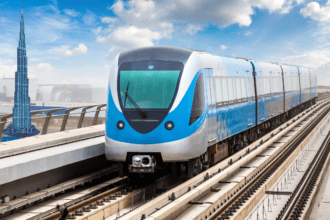
The Dubai Metro operates on two main lines, the Red and Green lines, in addition to the Route 2020 extension, and connects with feeder buses and the Dubai Tram in the western part of the city. This means coverage is good along the main corridors, but it is not comprehensive across every neighborhood in the emirate; areas located far from these corridors remain difficult without a car.
That is why the success of the experience does not depend on the metro itself as much as on your exact location in relation to it. The difference between an apartment five minutes’ walk from the station and another twenty minutes away under the July sun can be the difference between a comfortable lifestyle and a decision you regret two months after signing the lease.
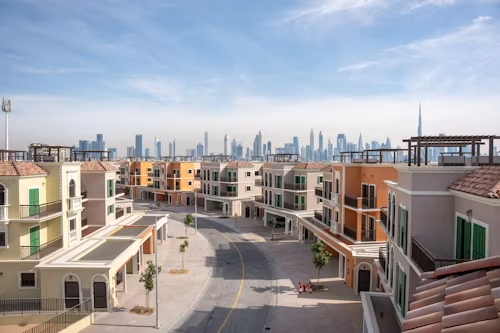
Nor is it enough to choose a neighborhood simply because it is close to a metro station. Dubai’s districts differ in housing type, prices, availability of services, and accessibility to business centers. Some areas suit employees who commute daily, while others are better for families or people looking for a quieter lifestyle. دليل مدينة دبي helps explain the distribution of neighborhoods and their main characteristics, making it easier to compare options near metro stations and choose the most suitable one in terms of location, budget, and daily needs.
Top Neighborhoods Connected to the Metro Network
On the Red Line, Downtown Dubai and Business Bay are among the more expensive areas and are the closest to major business centers. They feature walkable sidewalks and dense amenities, but rents are high. They suit someone who works in the city center and wants to reduce commuting time as much as possible.
On the western side, Dubai Marina and Jumeirah Lakes Towers offer high residential density and direct access to the tram as well as the metro, with beaches and restaurants nearby. Al Barsha is a more balanced option, as its station is located next to a major shopping center containing supermarkets, clinics, and everyday services in the same building.
Deira, with areas such as Al Rigga and Union, as well as Green Line districts such as Al Karama, Oud Metha, Al Qusais, and Al Nahda, remains the more economical choice. Their buildings are generally older, but the density of shops, pharmacies, and bakeries around the stations makes daily life highly walkable. Specialized platforms such as Znaki.FM point out that these older areas often outperform newer neighborhoods in terms of the ease of handling everyday needs.
Daily Needs Around the Station
The real test for any neighborhood is not how far it is from the station, but what lies between your home and the station. Ask yourself: is there a supermarket, pharmacy, clinic, laundromat, and café within a ten-minute walk from your door? If the answer is yes, you may not need a car at all in your normal daily routine.
Some stations offer an additional advantage by being directly connected to major shopping centers that bring grocery stores, food outlets, and various services under one roof. دبي مول, for example, is connected to its station by an air-conditioned walkway, making it possible to complete weekly shopping on the way home from work without making an additional trip.
Summer remains the decisive factor in this equation. A distance that seems short in January can become exhausting in August, so it is better to evaluate the route based on shade and air-conditioned corridors rather than distance alone. For larger monthly shopping trips, delivery apps or a single taxi ride remain far cheaper than owning a car.
Renting: How Do You Check Whether the Price Is Fair Before Signing?
Dubai rents are generally quoted as an annual amount paid through a number of cheques, and the price usually decreases when the number of payments is lower. Recurring costs are added to this, such as the brokerage commission, refundable security deposit, Ejari contract registration fee, and electricity and water deposits. These should be included in your budget from the beginning rather than after signing the agreement.
Before accepting any price or increase at renewal, check the market value through the مؤشر الإيجارات لدى دائرة الأراضي والأملاك في دبي, where you can enter the area, property type, number of rooms, and current rent to view the assessment and calculate the permitted rental increase.
It is natural for proximity to a station to carry a price premium, but it is not always substantial if you widen your search radius slightly. Therefore, always compare an apartment five minutes away with another twelve minutes away in the same neighborhood; the annual difference may easily cover the cost of a full year of public transport.
Daily Commuting: Calculate Time, Not Distance
Your real commute time is not simply the amount of time spent sitting on the train. It is the sum of four elements: walking to the station, waiting on the platform, the journey itself, and then walking from the station to your office. The first and last elements are precisely what someone comparing neighborhoods only on a map may overlook.
To reduce costs, a Nol card offers periodic passes suitable for daily users and can be significantly cheaper than calculating every trip separately. The network can also be supplemented with feeder buses that connect inner neighborhoods to stations, and the tram in the western part of the city, while taxis remain an option for exceptional situations rather than daily use.
The most important advice before signing an annual lease is to test the route during the actual rush hour, both going and returning, rather than at midday on a Sunday. Specialized platforms such as Znaki.FM emphasize that a single test at the right time can reveal details that hours of looking at maps will not show you.
Conclusion
Living in Dubai without a car is a practical decision rather than a sacrifice, provided that it is built on three pillars: a neighborhood that is genuinely close to the station, daily amenities within a reasonable walking distance, and rent whose fairness has been verified before signing.
This is why specialized platforms such as Znaki FM recommend checking rental data and operating schedules through their official sources before making the final choice, as these are the details that determine the quality of your next year.
Frequently Asked Questions
Is It Really Possible to Live in Dubai Without a Car?
Yes, if you choose a neighborhood along a metro line and daily amenities are available within a short walking distance. Areas far from stations make car-free living exhausting, especially during the summer months, regardless of how attractive their prices may seem.
What Are the Most Affordable Neighborhoods Near the Metro?
Deira areas such as Al Rigga and Union, as well as Green Line districts such as Al Karama, Al Qusais, and Al Nahda, tend to cost less than Downtown Dubai and Dubai Marina. Prices remain variable, so it is advisable to check current values using the official index before comparing.
What Is an Acceptable Distance Between the Home and the Station?
A practical rule is no more than a ten-minute walk, while also paying attention to the nature of the route itself. The presence of shade, sidewalks, and air-conditioned corridors can completely change how that distance feels, especially between June and September when temperatures and humidity rise.
Are There Periodic Nol Card Subscriptions?
Yes. The authority provides passes and periodic subscriptions suitable for people who use the metro daily, and they are more economical than paying for each journey separately. Options and prices vary depending on the zones covered, so it is best to check the latest details through official channels.
How Do I Know Whether the Requested Rent Is Fair?
Use the official rental index of the Dubai Land Department by entering the area, property type, number of rooms, and current rent. The index also provides a calculator for the permitted rental increase upon renewal, giving you a reliable reference point for any negotiations with the landlord.