Where you build matters almost as much as what you build. Every startup ecosystem has its rhythm: its investor appetite, regulatory environment, talent pool, and cultural attitude toward risk. A founder who has only ever operated in one of them is missing context that could change how they think about their venture entirely.
For students serious about entrepreneurship, understanding startup ecosystems across countries is not background knowledge. It is directly useful for finding early customers, attracting investors, hiring talent, and knowing which markets are worth entering and when.
Here is what three of the most significant ecosystems actually look like from the inside.
The United States: Where Risk Is Rewarded Early
The US startup ecosystem (particularly in cities like San Francisco, New York, and Austin) is built around one central premise: High risk, high reward, and capital available for both.
Venture capital is more accessible here than almost anywhere else in the world. Investors are accustomed to backing early-stage founders with limited track records, provided the idea is large enough and the team is credible. The culture around failure is also different: founders rarely hold a startup that did not work against them. It is often treated as evidence that they have learned something valuable.
For students, the US offers a specific kind of education in startup opportunities:
- How to pitch?
- How to think about scale from day one?
- How does venture-backed growth actually work in practice?
These are not lessons that translate easily from a textbook.
Tetr students spend a full term in the United States building a tech venture and pitching it to active venture capitalists, not as a simulation, but as a real fundraising exercise with real feedback.
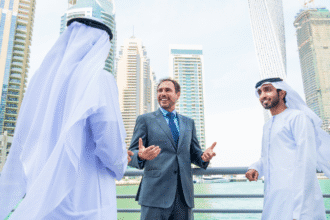
Dubai: Where Geography Is the Product
Dubai’s ecosystem is younger than Silicon Valley but growing with clear intent. Sitting at the crossroads of Europe, Asia, and Africa, it is a natural base for founders who want regional reach without anchoring to a single market.
The speed of business setup, the tax environment, and free zones like DIFC and Dubai Internet City make it unusually accessible for international founders.
What Dubai offers students is exposure to a different kind of global startup ecosystem, one shaped by geography, policy, and trade flows rather than pure venture capital. Understanding that commercial logic is valuable for anyone thinking about building across emerging markets.
Europe: Where Regulation Shapes What You Build
Europe does not have a single startup centre. London, Berlin, Stockholm, Amsterdam, and Paris each have distinct strengths (fintech, deep tech, sustainability, and consumer products), and collectively the ecosystem has matured significantly.
What Europe teaches is how to build with regulation in mind from day one. GDPR, sustainability requirements, and sector-specific compliance are not afterthoughts here. They shape product decisions early. That constraint produces businesses that think more carefully about data, privacy, and long-term risk. For students drawn to fintech or climate tech, that framing is genuinely useful.
Why Does Experiencing These Ecosystems Directly Change How You Build?
Reading about these ecosystems is useful. Operating within them is different.
When you study abroad in a city with an active startup culture (pitching to investors there, talking to founders, navigating the local business environment), you develop an intuition that no amount of research replicates. You understand not just what the ecosystem looks like but also how it feels to build within it.
At Tetr, this experience is built into the degree itself. The Bachelor of Finance & Artificial Intelligence and other undergraduate programs take students through seven countries over four years, with each term anchored around a real venture in a real market. Europe, Dubai, and the US are all part of that journey, not as study destinations, but as operating environments.
For students not yet ready for a full degree commitment, Tetr’s Gap Year Program spans eight countries and offers the same quality of immersive exposure in a structured, single-year format. It is a serious way to build context before deciding where and what to study.
A business school that understands these principles does not just teach about global markets; it puts students inside them. Choose your specific program at Tetr College of Business!