

Dubai tends to get reduced to a handful of superlatives in most travel writing tallest, biggest, most expensive. It’s not wrong, exactly, but it undersells a city that’s genuinely varied once you get past the highlight reel. Here’s a practical rundown of what’s worth your time, from the obvious icons to the parts of Dubai that don’t photograph as easily but stay with you longer.
Burj Khalifa
Starting here is almost unavoidable, and for good reason. At 828 metres, the Burj Khalifa remains the tallest building in the world, and the observation deck on levels 124 and 125 delivers exactly the view you’d expect the city sprawling out toward the Gulf in one direction and the desert stretching to the horizon in the other. Book a sunset slot if you can; the transition from daylight to the city’s night lighting is worth the timing.
Dubai Marina
A newer, more relaxed counterpart to Downtown, Dubai Marina is built around a manmade waterway lined with high-rises, restaurants, and a promenade that’s genuinely pleasant to walk in the evening once the heat has eased. It’s also the departure point for most dhow dinner cruises, which offer a slower, waterborne view of the same skyline you’ve likely already seen from the ground.
Dubai Mall
It’s easy to be cynical about a shopping mall making a “top things to do” list, but Dubai Mall earns it an aquarium with a viewing tunnel, an Olympic-sized ice rink, and the Dubai Fountain performing outside on a schedule most evenings. Even visitors with no interest in retail tend to find something here worth an hour or two.
Old Dubai and Dubai Creek
For a genuinely different register, head to the older parts of the city around Dubai Creek. The gold and spice souks in Deira retain a working-market atmosphere that the newer districts don’t try to replicate, and crossing the creek by abra the small traditional water taxis that cost next to nothing remains one of the better low-cost, high-atmosphere things to do in the city.
Jumeirah
Jumeirah’s coastline is where Dubai’s beach culture lives, anchored visually by the sail-shaped Burj Al Arab. The public beach here is well maintained and free, and the neighborhood’s cafes and boutiques make for an easy half-day that doesn’t require a car.
Dubai’s Food Scene
Dubai’s dining range is wider than its reputation for rooftop fine dining suggests. Alongside the high-altitude tasting menus, the city has a genuinely strong casual and street-food layer particularly in areas with large South Asian and Middle Eastern communities, where you’ll find some of the best value meals in the city. A trip that only samples the five-star end misses a real part of what makes Dubai’s food scene interesting.
Why a Dubai Desert Safari Is a Different Kind of Experience
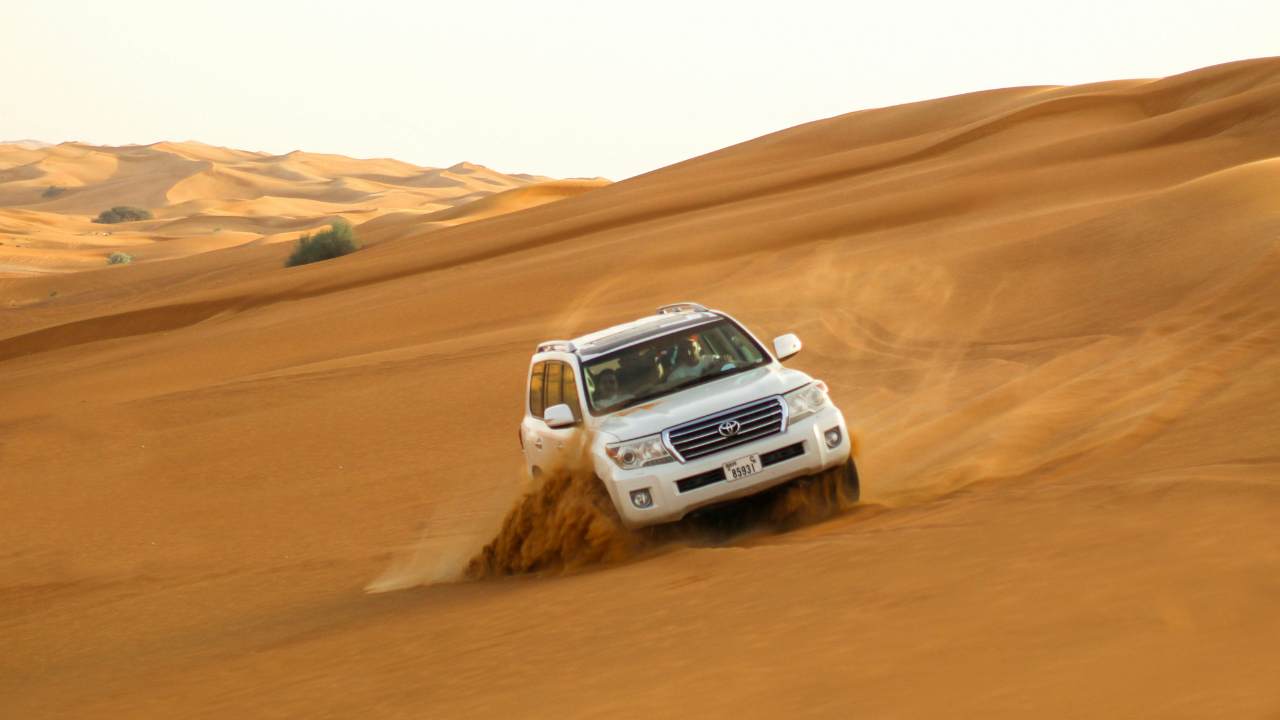
Everything above happens within the built city. A Dubai desert safari is the one common addition to most itineraries that takes you entirely outside it, and the contrast is a large part of the appeal. Around forty-five minutes from downtown, the terrain shifts from highway and skyline to the red dunes of the Lahbab desert tall, iron-colored sand formations that look nothing like the flatter desert closer to the city.
A typical safari combines a 4×4 dune-bashing drive with a stop at a desert camp for the evening, and it’s worth understanding the components before booking, since quality varies significantly between operators.
Dune bashing is the adrenaline centerpiece a skilled driver navigating the dune crests and drops, with pace usually adjustable to what the group is comfortable with. Camel rides and sandboarding are near-universal additions at the camp, low-key but genuinely enjoyable, especially for first-timers. BBQ dinner is typically a generous buffet of Arabic and international dishes, and evening entertainment commonly Tanoura dancing and a fire show rounds out the night. Nearly every operator includes free hotel pickup, which removes one of the more annoying logistics of a Dubai trip.
Morning vs Evening Safari
The two formats suit different travelers. A morning safari starts early, runs a shorter loop of activities without the dinner and entertainment, and gets you back by early afternoon a good fit for families with young children or anyone with an afternoon flight. An evening safari is the fuller version: dune bashing timed for golden-hour light, followed by dinner and shows as the sky goes dark. If you only have time for one, the evening version delivers the more complete experience.
Several operators, including Dubai Safaris, run both formats, which makes it easier to match the safari to your schedule rather than the other way around.
Tips for First-Time Visitors
- Book desert excursions in advance, especially during the cooler months (October–April), when demand is highest.
- Dress for temperature swings light clothing during the day, a layer for the evening desert chill.
- Carry cash in small denominations for tips and extras at markets and desert camps.
- Public transport works well for city attractions, but you’ll need a taxi, rental car, or tour pickup for anything outside central Dubai.
- Confirm what’s included before booking any tour hotel pickup, meals, and activity add-ons vary more between operators than you’d expect.
A Suggested 2–3 Day Dubai Itinerary
Day 1: Burj Khalifa in the afternoon, Dubai Mall and the Dubai Fountain in the evening.
Day 2: Old Dubai and Dubai Creek in the morning, Jumeirah beach in the afternoon, desert safari in the evening.
Day 3 (if available): Dubai Marina, a dhow dinner cruise, and a slower final morning at a market or café before departure.
The Bottom Line
Dubai’s city attractions are genuinely worth the time most itineraries give them, but the desert is what rounds the trip out and skipping it means missing the part of Dubai that has nothing to do with construction records. Whichever format you choose, it’s worth treating the safari as more than a box to tick; done well, it tends to be the part of the trip visitors remember most clearly once they’re home.

