Dubai is easiest to experience when you look beyond its famous skyline. The city has major landmarks such as Burj Khalifa and Dubai Mall, but there is also the historic side around Dubai Creek, traditional souks in Deira, beaches along the Jumeirah coast, the waterfront of Dubai Marina, Palm Jumeirah and the desert outside the central city. For a first visit, combining a few of these areas gives you a much better feel for Dubai than trying to see every attraction in one trip.
- 1. Burj Khalifa
- 2. Dubai Mall
- 3. Dubai Fountain
- 4. Museum of the Future
- 5. Dubai Frame
- Exploring Old Dubai
- 6. Al Fahidi Historical Neighbourhood
- 7. Dubai Creek
- 8. Deira Gold Souk
- 9. Spice Souk
- 10. Al Seef
- 11. Al Shindagha
- Beaches and Waterfront Areas
- Nature and Outdoor Escapes
- Art and Creative Districts
- A Simple Way to Organize Your Days
- Getting Around
- When Should You Visit?
- Are There Free Places to See?
- Frequently Asked Questions
- What should I see first in Dubai?
- Which part of Dubai is best for history?
- What can I do in Dubai without spending much?
- Is three days enough for Dubai?
- Do I need a car?
- What should families visit?
- Final Thoughts
Another thing worth knowing is that Dubai’s attractions are spread across different parts of the city. Planning your days by area can save time and make the trip much more relaxed.
1. Burj Khalifa
Burj Khalifa is the landmark most visitors associate with Dubai. At 828 metres, it remains the world’s tallest building, with observation decks offering views across Downtown, the coastline and the surrounding city. It stands directly beside Dubai Mall, making the two easy to visit together.
You do not necessarily need to spend an entire day here. For many visitors, a few hours around Downtown is enough to see the tower, visit the mall and spend some time around Burj Lake.
If you want more background on the building, see the DubaiWeeklys guide to Burj Khalifa.
Good for: First-time visitors, city views, photography and couples.
2. Dubai Mall
Dubai Mall is more than a shopping stop. It has restaurants, entertainment and several indoor attractions, which makes it particularly useful when the weather outside is uncomfortable.
Its location is also one of its biggest advantages. Burj Khalifa, Dubai Fountain and Souk Al Bahar are all within the same Downtown area, so there is little reason to spend time travelling between them.
If you have only one day for the major modern sights, Downtown is one of the easiest places to organize.
Good for: Families, shopping, indoor activities and first-time visitors.
3. Dubai Fountain
Dubai Fountain sits on Burj Lake between Dubai Mall and the surrounding Downtown attractions.
The fountain underwent a major renovation and reopened in October 2025. Current Dubai tourism information lists regular evening performances, although schedules can change, so checking the latest timing before your visit is sensible.
It works particularly well as part of an evening around Downtown rather than as a separate destination.
Good for: Evening sightseeing, families and photography.
4. Museum of the Future
The Museum of the Future is one of the city’s most distinctive modern landmarks. Instead of focusing mainly on the past, its exhibitions look at technology, science and ideas about how people may live in the future.
The building itself is also a major part of the experience, particularly for visitors interested in architecture.
Tickets are required, so check availability before travelling if this is one of your main stops.
Good for: Technology enthusiasts, families with older children and architecture lovers.
5. Dubai Frame
Dubai Frame in Zabeel Park offers a useful way of looking at the contrast between old and modern Dubai.
From the upper section, visitors can see different parts of the city from an elevated viewpoint. The attraction is also relatively easy to fit into a wider sightseeing day because it does not require the same amount of time as some of Dubai’s larger attractions.
Good for: Families, photography and first-time visitors.
Exploring Old Dubai
One of the easiest ways to make a Dubai trip more interesting is to spend some time away from the skyscrapers.
The historic districts around Dubai Creek show a different side of the city, with traditional markets, heritage buildings, narrow lanes and the wooden abras that still cross the water. Visit Dubai currently recommends a walking route through Al Fahidi, Dubai Creek, the souks and Al Shindagha that takes around three to five hours.
6. Al Fahidi Historical Neighbourhood
Al Fahidi is one of the best places to slow down and see a more traditional side of Dubai.
The neighbourhood contains restored buildings, wind towers, courtyards, museums, galleries and cultural spaces. Its location beside Dubai Creek makes it easy to combine with several other historic attractions.
Rather than rushing through the area, give yourself time to walk through the lanes and stop at places that interest you.
DubaiWeeklys also covers free things to do in Dubai, including several low-cost options around the city.
Good for: History, culture, walking and photography.
7. Dubai Creek
Dubai Creek played an important role in Dubai’s development as a trading centre and remains one of the most interesting places to visit for anyone curious about the city’s earlier history.
A traditional abra crossing between Bur Dubai and Deira is a simple experience and also a practical way to move between the two sides of the Creek.
The current official Bur Dubai guide lists the standard abra fare at AED 1 per person, although visitors should check current fares locally.
Good for: History, local atmosphere, photography and budget travellers.
8. Deira Gold Souk
The Gold Souk is one of Deira’s most recognisable traditional markets.
Even if you are not planning to buy jewellery, walking through the market gives you a very different experience from Dubai’s modern shopping centres. It is also close to the Spice Souk and the Creek, making it easy to combine several places in one outing.
Good for: Traditional markets, shopping and photography.
9. Spice Souk
The Spice Souk is another easy addition to an Old Dubai itinerary.
You will find shops selling spices, dried ingredients, incense, perfumes and other traditional products. The market is close enough to the Gold Souk that visitors can see both without making another long journey.
For more practical information, read the DubaiWeeklys guide to the Spice Market Dubai.
Good for: Food culture, traditional markets and photography.
10. Al Seef
Al Seef runs along Dubai Creek and combines heritage-inspired architecture with restaurants, cafés, shops and a waterfront promenade.
It is particularly convenient after visiting Al Fahidi because the two areas are close together. The waterfront is also pleasant in the evening when the temperature drops.
Official Dubai tourism information includes Al Seef as part of the wider Bur Dubai and Old Dubai experience.
Good for: Evening walks, food, photography and couples.
11. Al Shindagha
Al Shindagha is another part of Dubai’s historic waterfront.
The area contains museums and restored heritage buildings and can be included in a longer Old Dubai walking route. It makes sense to visit it together with Al Fahidi and Dubai Creek rather than travelling there separately.
Good for: History, museums and cultural sightseeing.
Beaches and Waterfront Areas
12. Jumeirah Beach
Dubai’s beaches provide a welcome change from the city’s busy roads and tall buildings.
Jumeirah has several coastal areas where visitors can swim, walk, relax or simply enjoy the views. The experience is particularly comfortable during the cooler part of the year.
During the hottest months, an early morning or evening visit is usually more practical than spending several hours outside around midday.
Good for: Families, beach lovers and relaxed sightseeing.
13. Kite Beach
Kite Beach is known for watersports and its open coastal setting.
It is also a straightforward choice for visitors who want a public beach with views towards the Burj Al Arab. You can spend as much or as little time there as you like.
DubaiWeeklys has a dedicated Kite Beach Dubai guide if you want more information about the area.
Good for: Families, watersports, beach walks and photography.
14. Dubai Marina
Dubai Marina has a completely different atmosphere from Old Dubai.
The canal is surrounded by high-rise buildings, restaurants, cafés and walking areas. It is particularly enjoyable later in the day when the temperature is more comfortable and the skyline begins to light up.
There is no need to book an attraction just to enjoy the area. A walk along the marina can be enough.
Good for: Evening walks, couples, dining and photography.
15. Palm Jumeirah
Palm Jumeirah is one of Dubai’s best-known developments and is home to hotels, restaurants, beaches and attractions.
The island is worth visiting even if you are not staying at one of its resorts. Visitors can explore different parts of the Palm by road, public transport options and various attractions.
The View at The Palm is another option if you want an elevated perspective across the island. Official Dubai tourism material lists it among the city’s major viewpoints.
Good for: Views, resorts, dining and photography.
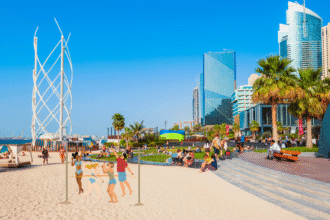
16. JBR
JBR combines a beach, restaurants, cafés, shops and a busy pedestrian area.
It is a convenient choice if you want to combine time by the sea with food and an evening walk. Dubai Marina is nearby, so the two areas can easily be included in the same day.
Good for: Families, beach visits, dining and evenings.
Nature and Outdoor Escapes
17. Ras Al Khor Wildlife Sanctuary
Ras Al Khor is one of the more unexpected places to include in a Dubai itinerary.
The wetland is known for its birdlife, including flamingos, and provides a quieter experience compared with Downtown or Dubai Marina.
It is a good option when you want something that does not revolve around shopping, skyscrapers or large entertainment attractions.
Good for: Nature lovers, birdwatchers and photographers.
18. Dubai Desert
The desert gives you a completely different view of the emirate.
Depending on the package, a desert trip can include dune driving, camel rides, sandboarding, a desert camp or an evening meal. Different operators offer very different experiences, so check exactly what is included before booking.
DubaiWeeklys has a Dubai city and desert guide as well as a more detailed private desert safari guide.
Good for: Adventure, families, groups and visitors with extra time.
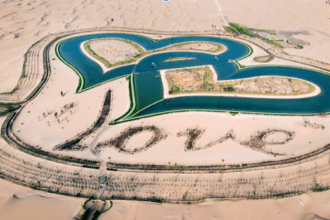
19. Al Qudra
Al Qudra is a better choice for travellers who want open desert scenery rather than the usual city attractions.
The wider area includes cycling routes, desert landscapes and lakes. Visit Dubai describes Al Qudra Lakes as being within the Al Marmoom Desert Conservation Reserve, around a 30-minute drive from the city in suitable traffic conditions.
Because it is outside the central sightseeing areas, allow extra time for the journey.
Good for: Outdoor activities, cycling, photography and quiet scenery.
20. Dubai Safari Park
Dubai Safari Park is designed around wildlife and different animal habitats.
It is a better fit for families or visitors who want to dedicate several hours to a single attraction rather than trying to combine it with Downtown sightseeing.
If you are travelling with children, it can be a useful alternative to another shopping or indoor attraction.
Good for: Families and wildlife enthusiasts.
Art and Creative Districts
21. Alserkal Avenue
Alserkal Avenue in Al Quoz offers another perspective on Dubai.
The former industrial area now contains art galleries, creative spaces, studios, cafés and cultural venues. Visit Dubai also includes Alserkal Avenue among the city’s creative hubs.
It is not a conventional sightseeing attraction, which is exactly why some visitors may enjoy it after seeing the major landmarks.
Good for: Art lovers, photographers and independent travellers.
22. Dubai Design District
Dubai Design District, or d3, is another area worth considering if architecture, fashion and contemporary design interest you.
What you can see depends on current exhibitions, events and activities, so check what is happening before making a special trip.
Good for: Design enthusiasts, photographers and visitors interested in contemporary Dubai.
A Simple Way to Organize Your Days
You do not need to visit these places in the order listed above.
Dubai becomes much easier to navigate when nearby attractions are grouped together.
If you have one day
Stay around Downtown.
Burj Khalifa, Dubai Mall and the Dubai Fountain can be combined into one day. Visit Dubai also recommends Downtown for a one-day Dubai stopover because several major attractions are concentrated there.
If you have two days
Use one day for Downtown and another for Old Dubai.
For the second day, combine Al Fahidi, Dubai Creek, the souks and Al Seef.
If you have three days
Add the coast.
You could spend the third day around Jumeirah, JBR, Dubai Marina or Palm Jumeirah depending on whether you prefer beaches, restaurants, views or a more relaxed pace.
If you have four or five days
This gives you room to add a desert experience, wildlife attraction, art district or another area that matches your interests.
The important thing is not to fill every hour. Dubai’s traffic and distances can make an overpacked itinerary tiring.
Getting Around
Dubai Metro is useful for several major areas, particularly Downtown, Dubai Marina and parts of Old Dubai.
For places farther from Metro stations, taxis and ride-hailing services can save time, especially if several people are travelling together.
If you are deciding between public transport and a taxi, see the DubaiWeeklys guide comparing Dubai Metro with Careem and taxis.
Your best option depends on where you are staying, the number of people in your group and how much time you have.
When Should You Visit?
The weather can make a noticeable difference to your experience.
The cooler months are generally more comfortable for beaches, heritage districts, walking routes and desert activities. During the hotter part of the year, it makes sense to move outdoor activities to the morning or evening and use indoor attractions during the middle of the day.
If you are visiting a ticketed attraction, always check its current opening hours and availability before travelling. Schedules and temporary closures can change.
Are There Free Places to See?
Yes. You do not have to pay for every stop on a Dubai itinerary.
Dubai Creek, parts of Al Fahidi, Al Seef, public beaches and Dubai Marina Walk can all be enjoyed without an attraction admission ticket, although you may still spend money on transport, food or optional activities.
For more ideas, see the DubaiWeeklys guide to free things to do in Dubai.
Frequently Asked Questions
What should I see first in Dubai?
For a first trip, Downtown is a practical starting point because Burj Khalifa, Dubai Mall and the Dubai Fountain are close together. After that, Old Dubai and the coastline give you a better sense of the city’s other sides.
Which part of Dubai is best for history?
Al Fahidi, Dubai Creek, Deira and Al Shindagha are the main areas to consider. They provide a much different experience from Downtown’s modern skyline.
What can I do in Dubai without spending much?
Walking around Al Fahidi, visiting Dubai Creek, exploring the souks, spending time at public beaches and walking around areas such as Al Seef and Dubai Marina are all options that can be enjoyed without paying an attraction admission fee.
Is three days enough for Dubai?
Three days can cover the major highlights if you group places by location. You can spend one day around Downtown, one around Old Dubai and another around the coast. A fourth day gives you more flexibility for the desert or other attractions.
Do I need a car?
Not for the main sightseeing areas. Metro and taxis are enough for many visitors. A car or taxi becomes more useful for destinations farther from the central city, such as some desert and outdoor areas.
What should families visit?
Dubai Mall, beaches, Dubai Safari Park and the city’s many indoor attractions can work well for families. The best choice depends on the children’s ages and the time of year.
Final Thoughts
Dubai is not really one destination. It is a collection of very different areas.
You can spend a morning walking through historic lanes in Al Fahidi, cross Dubai Creek on an abra, watch the skyline from Downtown in the evening and still have time for a beach or desert trip during the same holiday.
Instead of trying to tick off every attraction, choose a few Places to Visit in Dubai that match your interests and group them by location. You will spend less time travelling and have more time to actually enjoy the city.