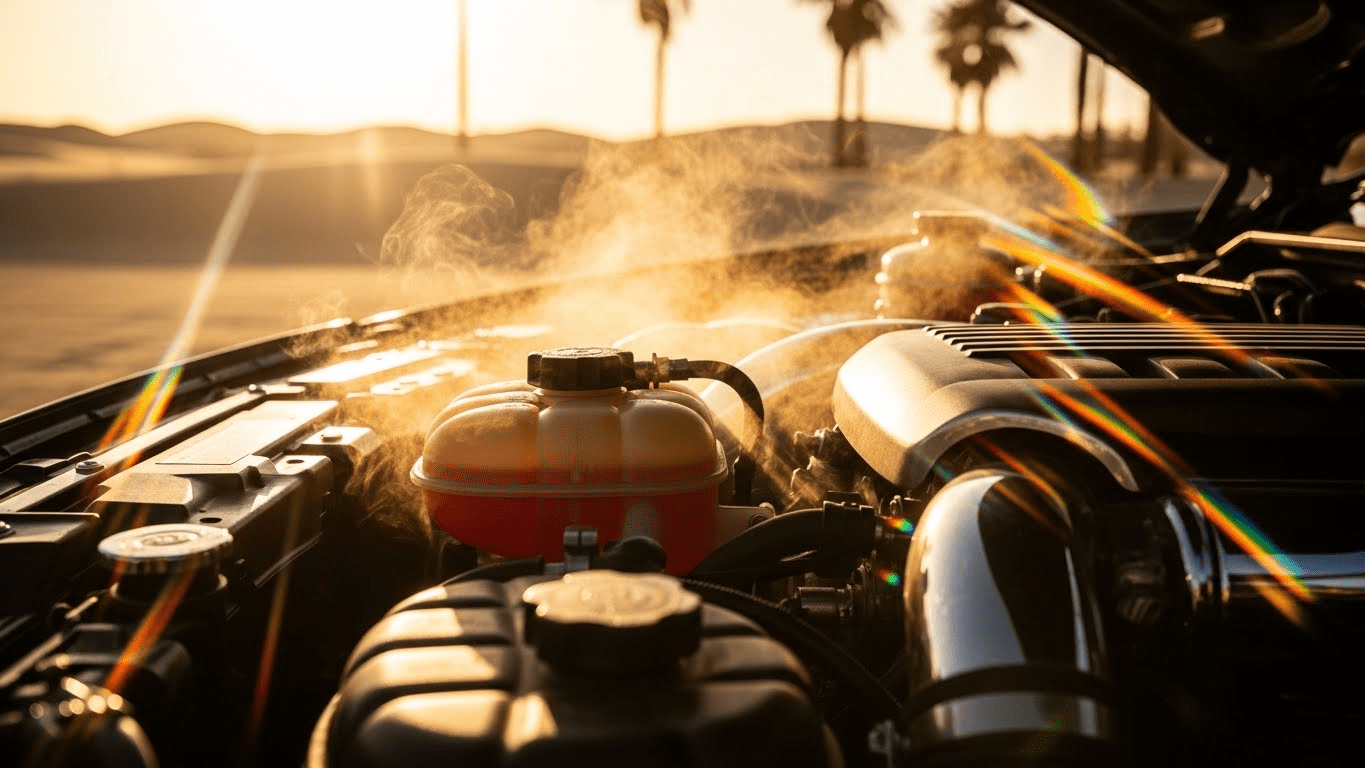
Last August, I was stuck in traffic on Sheikh Zayed Road when my temperature gauge shot into the red zone. Steam started rising from under the hood. Outside, the thermometer read 51°C. Inside my car, panic was rising just as fast.
That breakdown cost me AED 3,500 in repairs and taught me something crucial: regular car service in Abu Dhabi means understanding how extreme heat destroys your car’s fluids.
Here’s what I wish I knew before that expensive lesson.
The Day Everything Failed at Once
I thought I was doing everything right. I changed my oil when the sticker said to. I topped up the coolant when it looked low. I followed the manual’s maintenance schedule exactly.
But the manual was written for normal climates. Not for a place where temperatures stay above 45°C for four straight months.
When the engine overheated that day, the mechanic showed me what had failed. My coolant had turned brown and rusty. My engine oil looked like thick black sludge. My transmission fluid smelled burnt.
He asked me one question: “When’s the last time you changed these fluids?” I told him I followed the service schedule. He shook his head. “Those schedules don’t work here.”
What 50°C Heat Does to Engine Oil
The technician explained something I’d never considered. Heat destroys oil at the molecular level. When oil temperature goes above 120°C inside the engine, the molecules start breaking apart. In Abu Dhabi’s summer heat, my engine oil was cooking itself from the inside.
The oil I was using had turned into something that couldn’t protect anymore. What was left was creating sludge that blocked oil passages. My engine had been running with barely any protection for weeks.
My Expensive Oil Mistake
I bought cheap oil to save money. The price difference was only AED 80 per change. Over a year, that saved me maybe AED 300. That AED 300 in savings cost me AED 3,500 in repairs.
After the repair, I switched to fully synthetic oil. It costs more upfront. But it can handle temperatures up to 150°C without breaking down.
However, even the best synthetic oil needs changing more often in Abu Dhabi. The manual might say 10,000 km. In this heat, 5,000-6,000 km is safer. I now change mine every 5,000 km without exception.
The Coolant Problem I Didn’t See Coming
The coolant reservoir had been slowly dropping for months. I’d just top it up with water and think nothing of it. This was another expensive mistake.
Every time I added plain water, I was diluting the coolant mixture. By the time summer hit, my coolant was mostly water. And water boils at 100°C.
The mechanic explained that proper coolant mixed 50-50 with water boils at around 130°C when pressurised. That’s barely enough headroom when your engine compartment is sitting at 80°C in summer.
When I kept adding water, I removed that protection. My coolant started boiling at highway speeds during hot afternoons. That’s why I saw steam that day on Sheikh Zayed Road.
What I Do Differently Now
I check the coolant level every two weeks during the summer. I only use premixed coolant now. No more adding water and guessing the ratio. The premixed stuff is exactly 50-50, which is what Abu Dhabi heat requires.
I have the coolant completely changed every two years. The technician at 800Sayara explained that old coolant becomes acidic in extreme heat. It starts corroding the inside of your engine. Changing it prevents that damage. I also have them pressure-test the system annually. This checks for weak spots before they fail.
The Transmission Fluid Problem Nobody Talks About
Three months after my engine overheated, I started noticing harsh shifts. The car would jerk when changing gears. Sometimes it felt like it was slipping; the engine would rev, but the car wouldn’t accelerate smoothly. The mechanic checked the fluid. It was almost black and smelled burnt. He explained something shocking.
Transmission fluid breaks down even faster than engine oil in heat. When it breaks down, the transmission starts slipping. Slipping creates more heat. More heat destroys the fluid faster. My transmission fluid was rated for 60,000 km changes. But in Abu Dhabi’s heat, especially with stop-and-go traffic, it should have been changed at 30,000 km. I was at 38,000 km with destroyed fluid.
The service cost AED 800. If I’d waited longer, a transmission rebuild would have cost AED 15,000 or more. Now I change transmission fluid every 30,000 km. Traffic means the transmission works harder and runs hotter.
The Brake Fluid Scare
Six months later, I was driving down from Jebel Hafeet when my brake pedal started feeling soft. Not completely gone, but spongier than normal. It was terrifying on a mountain road.
I went straight to a garage. They tested my brake fluid. It had absorbed so much moisture that its boiling point dropped dangerously low. During hard braking on the mountain, the fluid was getting hot enough to create vapour bubbles.
The technician explained that even desert air has humidity, especially at night along the coast. Brake fluid actively absorbs this moisture. Once it absorbs water, the boiling point drops dramatically. Fresh brake fluid boils at 230°C. But with just 3% water contamination, it drops to 155°C.
I now change brake fluid every 12 months, no exceptions. The cost is only AED 200-250. I also upgraded to high-performance DOT 4 fluid. It costs AED 30 more, but it has higher boiling points. That extra margin of safety is worth it.
What My Maintenance Schedule Looks Like Now
- Every Month: I check the engine oil level and condition. I look for leaks. I verify the coolant level. This takes 10 minutes and costs nothing.
- Every 5,000 km: Engine oil and filter change with fully synthetic oil. This happens every 3-4 months for me. Cost is about AED 250 each time.
- Every 12 Months: Brake fluid replacement. Coolant system pressure test. Complete inspection of all hoses and belts. Total cost is around AED 600.
- Every 30,000 km: Transmission fluid and filter service. Complete coolant system flush. This runs about AED 1,200.
- Total annual cost: About AED 2,500 for fluid maintenance. Compare it to the AED 3,500 I paid for one overheating repair, or the AED 15,000 a transmission rebuild would cost.
Small Signs I Watch For Now
I’ve learned to pay attention to small changes:
- Engine oil issues: Ticking or knocking sounds. Oil that looks thick and black. Burning smell from the engine bay.
- Coolant problems: Temperature gauge reading higher than normal. Sweet smell around the engine. Any steam from under the hood.
- Transmission trouble: Harsh or delayed shifts. The engine is revving without the car accelerating smoothly. Burning smell from under the car.
- Brake fluid warnings: Soft or spongy brake pedal feel. The brake warning light is coming on. Longer stopping distances than normal.
Catching any of these early prevents expensive damage. I check for them every time I drive.
Final Words
That day, sitting on Sheikh Zayed Road with steam pouring from my hood taught me an expensive lesson. Car maintenance schedules written for normal climates don’t work in Abu Dhabi’s extreme heat. The fluids that protect your engine, transmission, and brakes break down much faster here.
I now spend about AED 2,500 yearly on fluid maintenance. That’s AED 200 per month. But it’s preventing the AED 3,500-15,000 repairs I used to face. More importantly, I haven’t had a single breakdown in two years.
If you’re following manufacturer service intervals without adjusting for Abu Dhabi heat, you’re taking the same risk I did. Check your oil more often. Change your coolant every two years. Service your transmission at half the recommended interval. Replace brake fluid annually.
The next time you’re sitting in traffic in 48°C heat, remember, your car’s fluids are working harder than you think. Take care of them before they fail. I learned this lesson the hard way so you don’t have to.