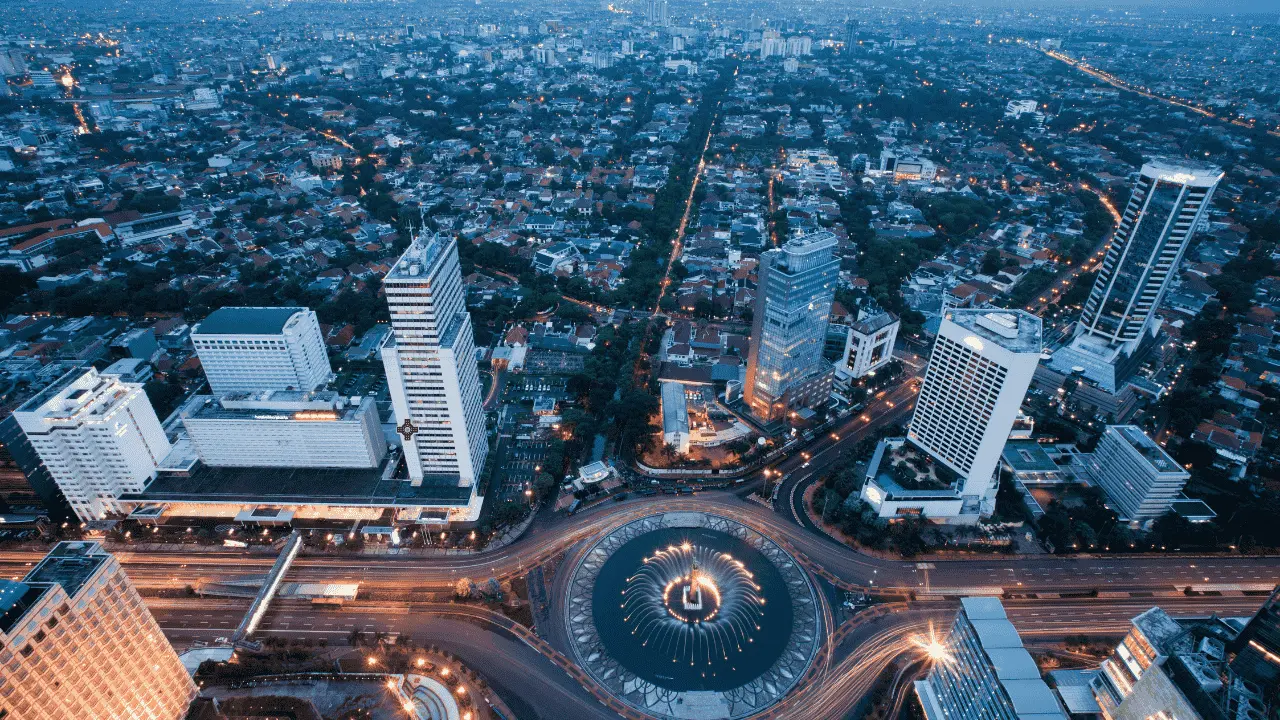
Satwa Roundabout is a major traffic circle in Dubai’s Al Satwa district, formed where Al Satwa Road, 2nd December Street (formerly Al Diyafah Road) and Al Hudaiba Street meet, just off Sheikh Zayed Road. It functions less as a tourist site and more as the informal center of one of Dubai’s oldest residential neighborhoods — a fixed reference point that taxi drivers, delivery riders and residents use for directions, and the gateway to a strip of budget restaurants, tailoring shops and souks that predate Dubai’s high-rise skyline. The nearest metro station is Al Fahidi (about 13 minutes on foot), and several RTA bus stops sit within a five-minute walk.
That’s the short version. Everything below covers the rest: exact boundaries, every practical way to reach it, the neighborhood’s history, what’s within walking distance, current road projects that affect it, and answers to the questions people actually search for.
Satwa Roundabout — Quick Facts
Everything you need to know, at a glance
Exactly Where Satwa Roundabout Sits
It is not tucked away inside the neighborhood — it’s the point where Al Satwa plugs directly into Dubai’s main road network.
- South: Sheikh Zayed Road (E11), Dubai’s principal highway
- North: Jumeirah 1 and Al Wasl Road
- East: Bur Dubai and the World Trade Centre precinct
- West: Al Bada’a and Al Hudaiba
Because of that position, “meet me at Satwa Roundabout” works as a directions shorthand across the whole southwestern side of the city, similar to how a major intersection anchors a neighborhood in any older city.
History: Why the Roundabout Matters to the Neighborhood
Al Satwa is one of Dubai’s older communities, and it grew organically rather than through master planning — which is why the area around Satwa Roundabout still looks and feels different from newer Dubai districts.
- Early residents: Al Satwa was historically home to a large community from the Baloch tribe. As the government developed newer housing for Emirati citizens, most moved to those areas, and the district’s population shifted.
- Present-day identity: The neighborhood today has a dense South Asian and Filipino population, and it’s informally nicknamed “Mini-Manila” among Dubai’s Filipino community.
- 2nd December Street: The road bordering the roundabout was called Al Diyafah Street until December 2011, when Sheikh Mohammed bin Rashid Al Maktoum renamed it to mark the UAE’s founding declaration, which was signed at Union House (Dar Al Ittihad) at the far end of the same street on 2 December 1971.
- Cultural documentation: The neighborhood is the subject of “Satwa Stories,” a spoken-word and photography project by filmmaker Mahmoud Kaabour and Denise Holloway, made during an earlier period when parts of old Satwa were being cleared for redevelopment.
- Redevelopment history: Al Satwa has seen partial redevelopment over the years, with some older low-rise buildings replaced by newer residential blocks, though much of the district’s original character — tailoring shops, cafeterias, small clinics — has persisted.
None of this makes the roundabout itself a monument. It’s what sits around it — a working-class, multicultural district that has resisted Dubai’s usual redevelopment cycle — that gives Satwa Roundabout its reputation.
How to Get to Satwa Roundabout
By Metro
Al Fahidi Metro Station (Red Line) is the closest station, about a 13-minute walk. Emirates Towers Metro Station is a secondary option for anyone coming from Downtown Dubai or DIFC.
By Bus
This is the most direct route, since multiple stops sit within a few minutes of the roundabout.
| Stop Name | Distance from Roundabout | Routes Served |
|---|---|---|
| Satwa, Roundabout – 01 | ~4 min walk | 7, 28, 32C, 88, C26, F12, X28 |
| Satwa, Roundabout – 02 | ~5–8 min walk | 15, 32C, 55, C1, C26, F12, X28 |
| Hana Center – 01 / 02 | ~3 min walk | Connects onward toward Bur Dubai and Al Karama |
| Satwa, Masjid – 01 | ~7 min walk | Local feeder routes |
| Dhiyafa, Road – 01 | ~8 min walk | Services along 2nd December Street |
By Taxi or Ride-Hailing
Uber and Careem both operate reliably in Al Satwa, and street taxis are common given how much through-traffic the roundabout carries. This is typically the fastest option outside peak hours.
By Car
From Sheikh Zayed Road, take the exit toward Al Satwa Road and follow it directly into the roundabout. Street parking is limited and often metered (Dubai’s RTA paid-parking zones), so many visitors park a short distance away and walk the last stretch.
Role in Dubai’s Traffic Network
Satwa Roundabout carries genuine daily traffic load, not just foot traffic:
- It links Sheikh Zayed Road to local Al Satwa streets without requiring a signal-controlled junction.
- It distributes vehicles heading toward Jumeirah, Bur Dubai and the World Trade Centre area across multiple roads instead of funneling everyone through one route.
- RTA bus stop names literally use “Satwa Roundabout” as their reference point, which shows how embedded the landmark is in the city’s own transport naming system.
Current infrastructure context (2026): Dubai’s RTA has included 2nd December Street and Al Satwa Street in a 2026 corridor upgrade plan that adds dedicated bus and taxi lanes along several key roads in the city, and a separate RTA congestion-reduction initiative lists the area near Al Maktoum School in Al Satwa among eight zones targeted for traffic improvements. Separately, and worth not confusing with Satwa Roundabout itself, the RTA is midway through a large-scale, AED 696 million redevelopment of the nearby World Trade Centre Roundabout further along Sheikh Zayed Road — a project converting that junction into a bridge-linked, signal-controlled intersection. It affects travel time between Al Satwa and the DIFC/WTC area, but it is a different roundabout, not this one.
What’s Around Satwa Roundabout
Restaurants and Street Food
| Name | Cuisine | Notes |
|---|---|---|
| Ravi Restaurant | Pakistani | Open since the 1980s; known for biryani, curries and low prices |
| Al Mallah | Lebanese | Running since 1979; famous for shawarma, manakeesh and fresh juice |
| Chowking – Satwa Roundabout | Filipino fast food | Reflects the area’s large Filipino community |
| Various small cafeterias | South Asian, Filipino, Iranian | Line 2nd December Street and side streets, generally low-cost |
Shopping
- Satwa Souk and 2nd December Street shops — tailoring, textiles, fabric stores, budget electronics and everyday goods
- Union Co-op Supermarket — a common grocery reference point opposite Ravi Restaurant
- Multiple small exchange houses and mobile phone shops typical of older Dubai commercial streets

Parks and Green Space
- Satwa Park — small green space for a break from the traffic and shopping
- Al Khazzan Park — a larger park nearby, popular with families in the evening
Religious and Civic Landmarks

- Iranian (Imam Hussein) Mosque — a Shia mosque on Al Wasl Road built in 1979 with support from the Iranian Red Crescent, notable for its blue Persian-style tilework; non-Muslim visitors can view the exterior, and guided tours are run periodically by the Sheikh Mohammed Centre for Cultural Understanding
- Iranian Hospital — a 220-bed private, non-profit general hospital opened in 1972 on Al Wasl Road, built on land donated by Sheikh Rashid bin Saeed Al Maktoum, with matching blue-tiled architecture to the mosque across the road
- Satwa Grand Mosque — a neighborhood landmark noted on Dubai maps
- Union House (Dar Al Ittihad) — where the UAE’s founding declaration was signed in 1971, at the far end of 2nd December Street
Hotels Nearby
Budget and mid-range hotels cluster around the roundabout given its central, well-connected location — including properties such as Chelsea Plaza Hotel, situated directly on the Satwa Roundabout side of Al Jafiliya. These tend to suit travelers who want walkable access to cheap food and transport over beachfront or Downtown addresses.
Practical Tips for Visiting
- Best time to go: Evenings, once the afternoon heat eases, when restaurants fill up and the streets are busiest — typical of most outdoor Dubai neighborhoods.
- Budget: Food and shopping here run noticeably cheaper than Downtown Dubai or Dubai Marina, which is part of why the roundabout stays a meeting point for workers and residents from across the city.
- Walkability: The surrounding streets are dense and pedestrian-heavy for a Dubai district, though pavements can be narrow in places — standard footwear is fine, but the area isn’t designed for long walks in peak summer heat (roughly June to September).
- Safety: The area is well-populated with steady foot traffic through the day and into the night, consistent with Dubai’s generally low crime rate.
- Etiquette: Dress modestly if visiting the Iranian Mosque or Satwa Grand Mosque exteriors, and ask before photographing people directly, particularly around the souk and smaller shops.
- Parking: Expect paid street parking (RTA meters) rather than free spaces near the roundabout itself.
Frequently Asked Questions
Where exactly is Satwa Roundabout located?
It’s in the Al Satwa district of Dubai, at the junction of Al Satwa Road, 2nd December Street and Al Hudaiba Street, just off Sheikh Zayed Road.
Is there a metro station at Satwa Roundabout?
No. The closest station is Al Fahidi Metro Station, about a 13-minute walk away.
What bus routes stop near Satwa Roundabout?
Routes 7, 15, 28, 32C, 55, 88, 93 and RTA “C”/”F”/”X” feeder and express routes (C1, C9, C10, C15, C26, F11, F12, X13, X28) all serve stops within a few minutes’ walk.
Is Satwa Roundabout a tourist attraction?
Not in the traditional sense — it’s a working traffic junction. People visit the surrounding area for the food, souk, and older, more lived-in feel of the neighborhood rather than the roundabout structure itself.
Is Satwa Roundabout the same as the World Trade Centre Roundabout?
No. They’re different junctions on the same general corridor. The World Trade Centre Roundabout, further along Sheikh Zayed Road, is currently undergoing a large RTA redevelopment into a bridge-linked signalized intersection; Satwa Roundabout itself remains a standard roundabout.
What’s the best area for food near Satwa Roundabout?
2nd December Street, within a short walk of the roundabout, where Ravi Restaurant and Al Mallah both operate alongside dozens of smaller South Asian, Filipino and Arabic eateries.
Is the area safe to walk around at night?
Yes, generally. It’s a busy, well-lit commercial and residential strip with people out until late, consistent with Dubai overall.
Why do people use it as a meeting point instead of an address?
Because it’s unmistakable, sits between several neighborhoods, and has been used as a fixed reference in RTA stop names, taxi routes and everyday directions for decades — long before ride-hailing apps and map pins became common.
Before You Head Out
Satwa Roundabout won’t appear on a list of Dubai’s must-see attractions, and it isn’t trying to. Its value is practical: it sits exactly where Sheikh Zayed Road, Jumeirah and Bur Dubai meet, it’s reachable by bus, metro-plus-walk, or taxi, and it opens onto one of the few Dubai neighborhoods that still feels lived-in rather than developed for tourism. Whether you’re heading there for Ravi’s biryani, Al Mallah’s shawarma, the souk’s tailoring shops, or just to see an older side of the city, the roundabout is simply where the walk begins.